

How Do I Track Who Is Entering and Exiting My Facility?

Tracking who enters and exits your facility is no longer optional, it is a core part of maintaining security, safety, and operational control. Whether you manage a commercial building, healthcare site, or multi-tenant property, knowing exactly who has access, when they entered, and where they went is critical to preventing issues before they escalate.
The challenge is that many facilities are still relying on outdated or disconnected systems that create gaps in visibility. Understanding how access tracking has evolved, and what works today, can help you make the right decision for your building.
Where Traditional Methods Fall Short
For years, facilities relied on sign-in sheets, physical keys, and security personnel to manage access. While these methods provided a basic level of control, they come with serious limitations.
Manual logs are prone to human error and can easily be falsified, making them unreliable for accurate tracking. Physical keys create even bigger challenges. Once a key is lost, copied, or not returned, there is no way to track who has access or where it is being used.
In high-traffic buildings, these gaps quickly turn into operational risks. You lose visibility, accountability, and control over your facility.
Moving to Electronic Access Control
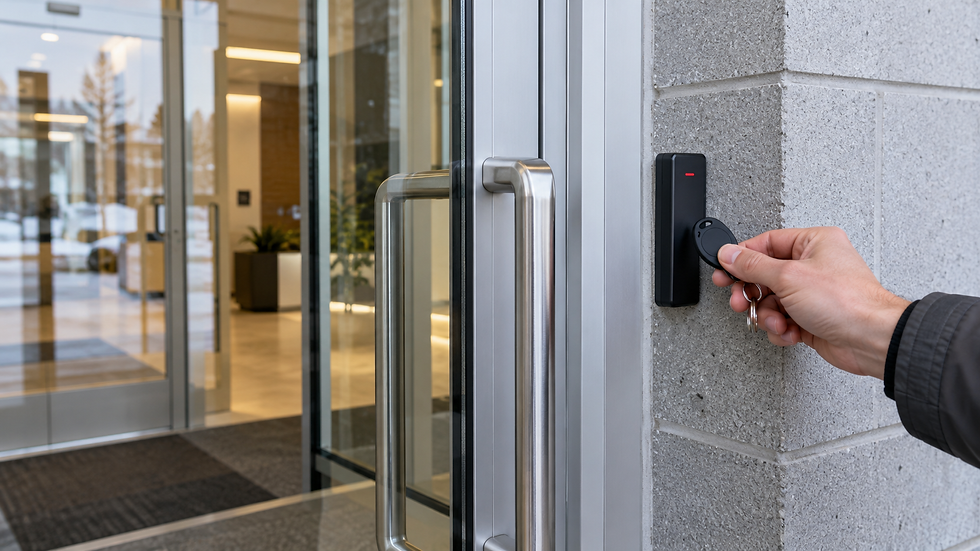
Electronic access control systems (EACS) have become the standard for modern facilities. Instead of keys, users are assigned credentials such as keycards, PIN codes, or mobile access.
Every time someone enters or exits, the system records:
Who accessed the door
Where the access occurred
The exact time and date
This creates a clear, searchable record of activity across your building.
Keycard and RFID systems are among the most widely used solutions because they are scalable and easy to manage. They improve accountability and reduce unauthorized access by ensuring every entry is tied to a specific user.
For facilities with higher security requirements, biometric systems, such as fingerprint or facial recognition, add another layer of protection. These systems eliminate the risk of shared or duplicated credentials and significantly reduce identity fraud.
Need a system that gives you full visibility across your facility? Edmonton Lock & Safe designs and installs access control systems tailored to your building.
Adding Video for Full Visibility
Access control tells you who entered, but video surveillance shows you what actually happened.
By integrating CCTV systems with access control, facilities can cross-reference entry logs with real-time or recorded footage. This is especially valuable during incident investigations or security concerns.
Modern systems go even further. With AI-powered analytics, cameras can:
Detect unusual movement patterns
Identify unauthorized individuals
Trigger alerts based on suspicious activity
This combination of data and visual verification creates a much stronger security framework.
Cloud-Based and Smart Access Systems
Instead of managing systems locally, administrators can now monitor and control access remotely across multiple sites. This is especially valuable for property managers and organizations with multiple buildings.
Cloud-based systems allow you to:
Add or remove users instantly
Monitor activity in real time
Access reports from anywhere
IoT-enabled devices, such as smart locks and sensors, also provide real-time alerts. For example, you can be notified if a door is left open or if unauthorized access is attempted.
Mobile access is another growing trend. Employees can use their smartphones as credentials, reducing reliance on physical cards while adding convenience and security through multi-factor authentication.
Looking to modernize your system? Edmonton Lock & Safe can help you transition to cloud-based and mobile access solutions.
Best Practices for Tracking Facility Access
1. Match the system to your building
High-security environments may require biometrics, while other facilities benefit from scalable keycard systems.
2. Prioritize data security and compliance
Access systems store sensitive information. Proper data protection and regulatory compliance are essential.
3. Maintain and audit your system regularly
Outdated software or failing hardware can create vulnerabilities. Regular maintenance ensures reliability.
4. Train your team
Even the best system can fail if users don’t follow proper procedures. Clear policies and training are critical.
5. Integrate your systems
Combining access control, surveillance, and alarms creates a layered security approach that improves response times and overall effectiveness.
A Smarter Way to Control Your Facility
Modern access systems give you the ability to:
Know exactly who is in your building
Respond quickly to incidents
Eliminate the risks of unmanaged keys
Scale your system as your facility grows
As technology continues to evolve, facilities that invest in integrated, data-driven systems will be better equipped to handle both daily operations and unexpected challenges.


Comments