

Why Is My Building’s Key Fob System Not Unlocking the Door?

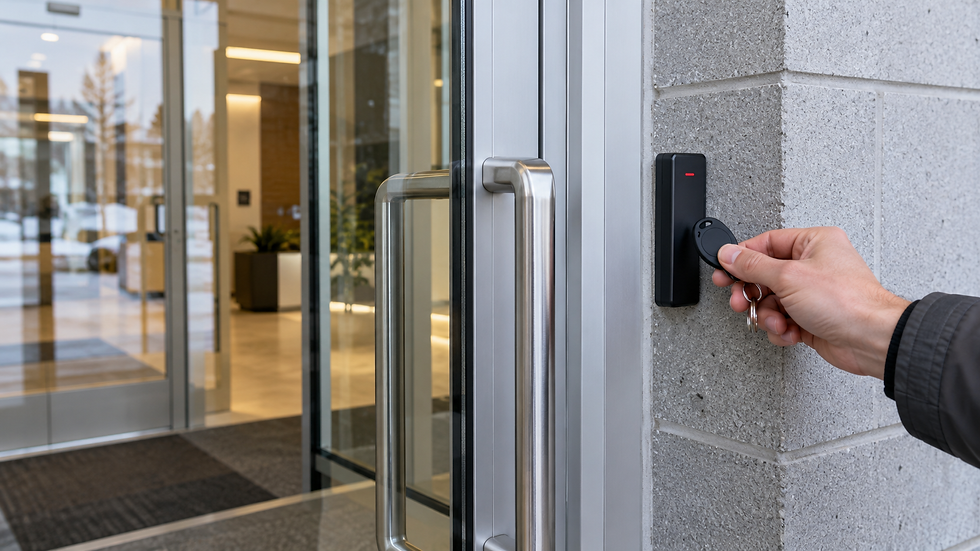
When a tenant or employee presents their key fob and the door stays locked, the problem quickly becomes yours to manage. People need access, complaints start arriving, and leaving the entrance open creates another security concern.
The cause could involve the credential, access permissions, reader, electrical supply, or door hardware. Replacing fobs without checking the system may leave the original problem unresolved.
Edmonton Lock & Safe helps building owners and managers address access and door hardware concerns. Here is how to approach an entrance that will not unlock.
Start With Who, Where, and When
Establish the pattern before assuming a component has failed. Is one person affected, or are several authorized users unable to enter? Does the same fob work at another entrance? Does the issue happen consistently or at certain times?
One unsuccessful credential may suggest an individual fob or permission issue. Several users failing at one door may point toward that entrance’s equipment. Neither pattern confirms the cause.
Record the affected door, approximate time, and reader response. Note any recent changes to access settings, door hardware, or electrical equipment.
Several authorized users unable to enter? Contact Edmonton Lock & Safe to discuss the affected entrance and arrange an assessment.
The Fob May Be Damaged or Inactive
A credential needs to be readable and active before its assigned permissions can allow entry. Physical damage or a deactivated credential can prevent someone from using a previously accessible entrance.
Have the system administrator confirm that the credential is active and assigned to the correct person. Compare its operation with another authorized fob at the same door.
If other credentials work normally, check the affected fob before assuming the reader needs replacement. If the system recognizes it but denies entry, its permissions deserve closer attention.
Access Permissions May Be Incorrect
An active credential does not necessarily open every controlled door. Access may be limited by entrance, user group, schedule, or an authorization expiry date.
A contractor might be permitted entry during approved working hours but denied access outside that schedule. A tenant or employee could have an incorrect door assignment following an administrative change.
Ask the administrator to review the user’s assigned entrances, schedules, and effective dates. Avoid granting broader access simply to stop a complaint. The correction should restore the access that person needs while maintaining appropriate restrictions.
Check Whether Access Was Denied or Granted
Where available, access event records can help distinguish a permission problem from an entrance that fails to release.
An “access denied” event may identify a credential, schedule, or authorization issue. An “access granted” event while the door remains locked shifts attention toward the release hardware, its power supply, wiring, or door alignment. It does not prove which component has failed.
A beep or light alone cannot establish that access was approved. Its meaning depends on the installed reader and system.
If no corresponding event appears, further checks may be needed to establish whether the credential was read and the request reached the controller.
The Reader or Door Hardware May Need Service
Reader, wiring, or controller faults can interrupt access requests. Even when the system approves entry, the locking hardware must still release correctly.
Electrical faults or defective locking equipment can prevent release. Mechanical problems can also contribute. On some electric strikes, pressure from the door latch against the strike can interfere with unlocking. A door that rubs, binds, or sits incorrectly in its frame should be assessed alongside the electronic components.
How an entrance responds to power loss depends on its locking hardware and configuration. An outage does not automatically unlock every door.
Does the system record approved access while the door stays locked? Contact Edmonton Lock & Safe to arrange a review of the door and locking hardware.
Do not dismantle equipment, bypass controls, or prop open a secured entrance as a workaround. If people cannot safely exit, treat that as an urgent safety concern.
Restore Access With a Clear Plan
You do not need to identify the failed component before contacting Edmonton Lock & Safe. Share which entrance is affected, who cannot enter, when it happens, and any available access records.
Our team can assess the door and locking hardware, explain suitable options, and help determine the required next step. Depending on the findings, that may involve an administrator correcting permissions or technicians addressing equipment and door operation.


Comments