

Can Tenants Sue Landlords for Security Failures? What You Need to Know


When something goes wrong in a rental property, especially involving safety, the question comes up quickly: who is responsible?
In Edmonton, tenants do have the right to take legal action against landlords for security failures. But the reality is more nuanced. These cases depend on specific legal standards, evidence, and whether the risk could have been prevented.
If you manage a building or own rental property, understanding this isn’t optional. It directly affects your liability, your tenants’ safety, and your long-term risk.
At Edmonton Lock & Safe, we help property owners stay ahead of these issues before they turn into claims.
The Legal Duty Landlords Owe
In Alberta, landlord responsibility is shaped by the Occupiers’ Liability Act and general negligence law.
At a basic level, landlords must ensure their property is reasonably safe for tenants and visitors.
This goes beyond obvious physical hazards. It includes security risks such as:
Broken or weak locks
Poor lighting in common areas
Unsecured entry points
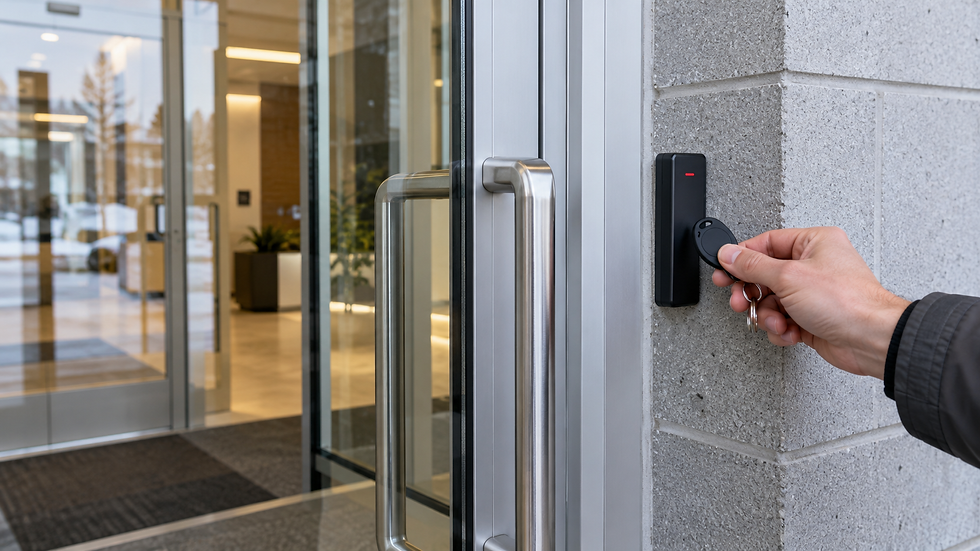
Lack of access control
The key word is reasonable. Landlords are not expected to guarantee safety, but they are expected to take practical steps to reduce foreseeable risks.
If you’re unsure whether your property meets a reasonable security standard, Edmonton Lock & Safe can assess your current setup and identify gaps before they become liabilities.
When Security Becomes a Legal Issue
For a tenant to successfully sue, they must prove negligence. That means showing four things:
The landlord had a duty of care
That duty was breached
The breach caused harm
There were actual damages
This is where most cases are won or lost.
For example:
A tenant reports a broken front entrance lock multiple times
The issue is not fixed
A break-in or assault occurs
In that situation, the argument becomes clear: the risk was known, preventable, and ignored.
That is where liability starts to build.
Fixing a lock after an incident is reactive. Fixing it before is protection. Talk to Edmonton Lock & Safe about upgrading entry points across your building.
Foreseeability Is What Matters Most
One of the most important legal concepts in these cases is foreseeability.
Courts look at whether the landlord knew, or should have known, that a risk existed.
Examples that increase foreseeability:
Previous break-ins or incidents
Repeated tenant complaints
Visible security failures
If a risk is foreseeable and nothing is done, the landlord’s position becomes significantly weaker.
This is where many property owners underestimate their exposure. Small, unresolved issues can build a pattern that works against them.
If your building has had repeated security concerns, it’s time to address the root cause. Edmonton Lock & Safe can help you implement long-term solutions, not temporary fixes.
Where Liability Applies
Not every incident automatically falls on the landlord.
Liability often depends on control of the space:
Common areas (hallways, entrances, parkades) are typically the landlord’s responsibility
Inside tenant units may shift responsibility depending on the situation
There are also limits:
Landlords are only required to take reasonable steps
Tenants can share responsibility (for example, leaving doors unlocked)
Not every criminal act is predictable or preventable
This is why strong, documented security measures matter. They demonstrate that reasonable steps were taken.
How Tenants Pursue Claims
In Edmonton, tenants can:
File through the Residential Tenancy Dispute Resolution Service (RTDRS)
Pursue civil claims for more serious incidents involving injury or loss
In higher-stakes cases, the focus shifts heavily to evidence:
Maintenance records
Complaint history
Condition of locks and access points
Overall security systems in place
This is where many landlords run into trouble. If there is no proof of action, it becomes difficult to defend.
Upgrading your security is one part. Being able to show it is just as important.
What This Means for Property Owners
The takeaway is simple.
Security is not only about protecting tenants. It is about protecting yourself from avoidable risk.
Waiting until something happens puts you in a defensive position. Taking action early keeps you in control.
The most effective approach includes:
Reliable, commercial-grade locks
Controlled access to buildings and units
Properly secured common areas
Regular inspections and maintenance
These are not upgrades. They are part of meeting your legal standard of care.
Take Control Before It Becomes a Claim
Tenant lawsuits around security failures are not based on rare scenarios. They are often built on small issues that were ignored for too long.
The difference between a resolved issue and a legal claim is usually timing.
If you own or manage a building in Edmonton, now is the time to evaluate your security.
Because when it comes to security, being proactive is always less costly than being reactive.


Comments