

How To Reduce The Number Of Keys I Need For My Building?


Managing keys in a building shouldn’t feel like managing chaos. Yet for many property managers, facility teams, and business owners, that’s exactly what happens. Over time, keys multiply. Different doors require different access. Staff changes, tenants rotate, and suddenly you’re dealing with dozens, or even hundreds, of keys in circulation.
At Edmonton Lock & Safe, we help buildings move from scattered key systems to structured, secure access control. Here’s how you can reduce the number of keys in your building while improving efficiency and security at the same time.
The Real Problem: Too Many Keys, Not Enough Control
When every door has its own key, things quickly become difficult to manage.
Staff carry bulky keychains. Time is wasted trying to find the right key. Lost keys create immediate security concerns. And every time someone leaves the organization, you’re left wondering what they still have access to.
The more keys in circulation, the harder it becomes to track, control, and secure your building.
The Most Effective Solution: Master Key Systems
The fastest way to reduce the number of keys is by implementing a master key system.
Instead of one key per door, a master key system creates a structured hierarchy:
Individual keys open specific doors
Master keys open multiple related areas
Grand master keys can access entire buildings or sites
This allows you to dramatically simplify access without sacrificing security.
Why It Works
A properly designed master key system can:
Reduce the number of keys building managers carry by up to 70%
Limit unnecessary access between departments or tenants
Improve response time for maintenance and operations
Centralize control without constant rekeying
Instead of reacting to problems, you gain a system that’s designed around how your building actually operates.
Rekeying: The First Step Toward Simplification
If your building already has multiple locks in place, you don’t always need to replace everything to improve control.
Rekeying allows existing locks to be adjusted so they work with new keys. This is often the first step in transitioning to a simplified system.
When Rekeying Makes Sense
After staff turnover or tenant changes
When keys have been lost or copied
When multiple independent locks need to be unified
When preparing for a master key system upgrade
Rekeying helps bring your building back under control without the cost of full hardware replacement.
Not sure if you need rekeying or a full upgrade? Edmonton Lock & Safe can assess your current system and recommend the most cost-effective path forward.
Interchangeable Core Systems for High-Traffic Buildings
For facilities that experience frequent changes, like schools, healthcare environments, or multi-tenant buildings, flexibility is critical.
Interchangeable core systems allow you to swap out lock cores quickly using a control key. This means you can change access instantly without removing the entire lock.
Key Benefits
Immediate response to lost or compromised keys
Minimal downtime during security updates
Easy integration with master key systems
Scalable for growing or changing facilities
Moving Beyond Keys: Electronic Access Control
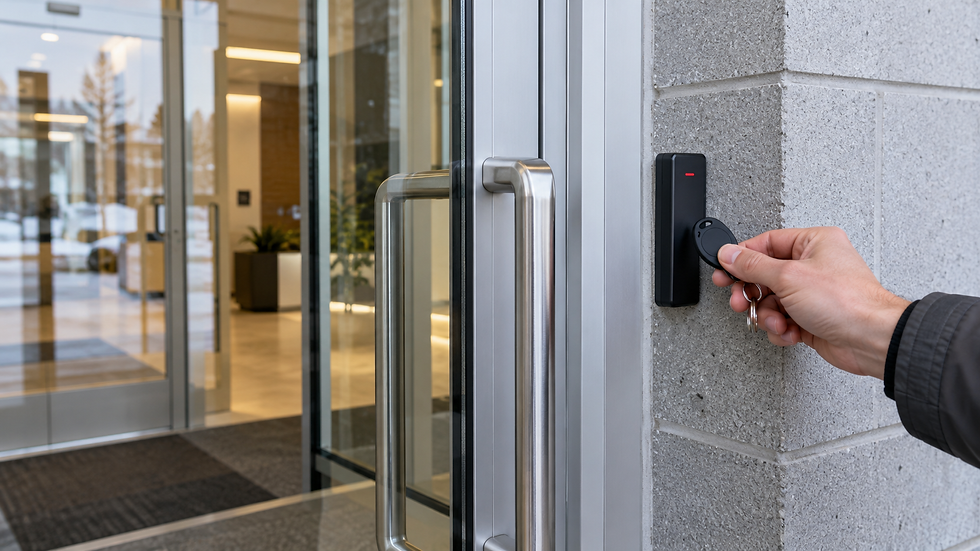
For many buildings, the next step is reducing, or even eliminating, physical keys altogether.
Electronic access systems use:
Keycards or fobs
Mobile credentials
Keypads or biometric entry
Instead of issuing keys, you assign access digitally.
Why Buildings Are Making the Shift
No physical keys to lose or duplicate
Ability to track who enters and exits
Instant updates to permissions
Remote control of access
Many buildings now use hybrid systems, combining master keys with electronic access for added flexibility and backup.
Don’t Skip This: Administrative Control
Even the best system won’t work without proper management.
To truly reduce keys and maintain security, you need structure behind the system.
Best Practices
Define access levels before assigning keys
Group users by role or department
Keep clear records of who has what
Restrict unauthorized key duplication
Conduct regular audits of access
What to Watch Out For
Reducing keys comes with clear benefits, but it needs to be done properly.
A poorly designed system can create:
Overexposure if a master key is lost
Security gaps if access levels aren’t clearly defined
Weak points if low-quality hardware is used
That’s why system design matters.
At Edmonton Lock & Safe, we use high-security key systems, restricted keyways, and structured planning to ensure your building stays protected while simplifying access.
A Smarter Way to Manage Your Building
Reducing the number of keys in your building is about gaining control.
With the right combination of:
Master key systems
Rekeying strategies
Interchangeable cores
Electronic access control
You can turn a disorganized key system into a streamlined, secure solution that supports your operations, not slows them down.
Ready to simplify your building’s access and reduce key chaos? Contact Edmonton Lock & Safe to design a system that works for your team, your tenants, and your long-term security.


Comments